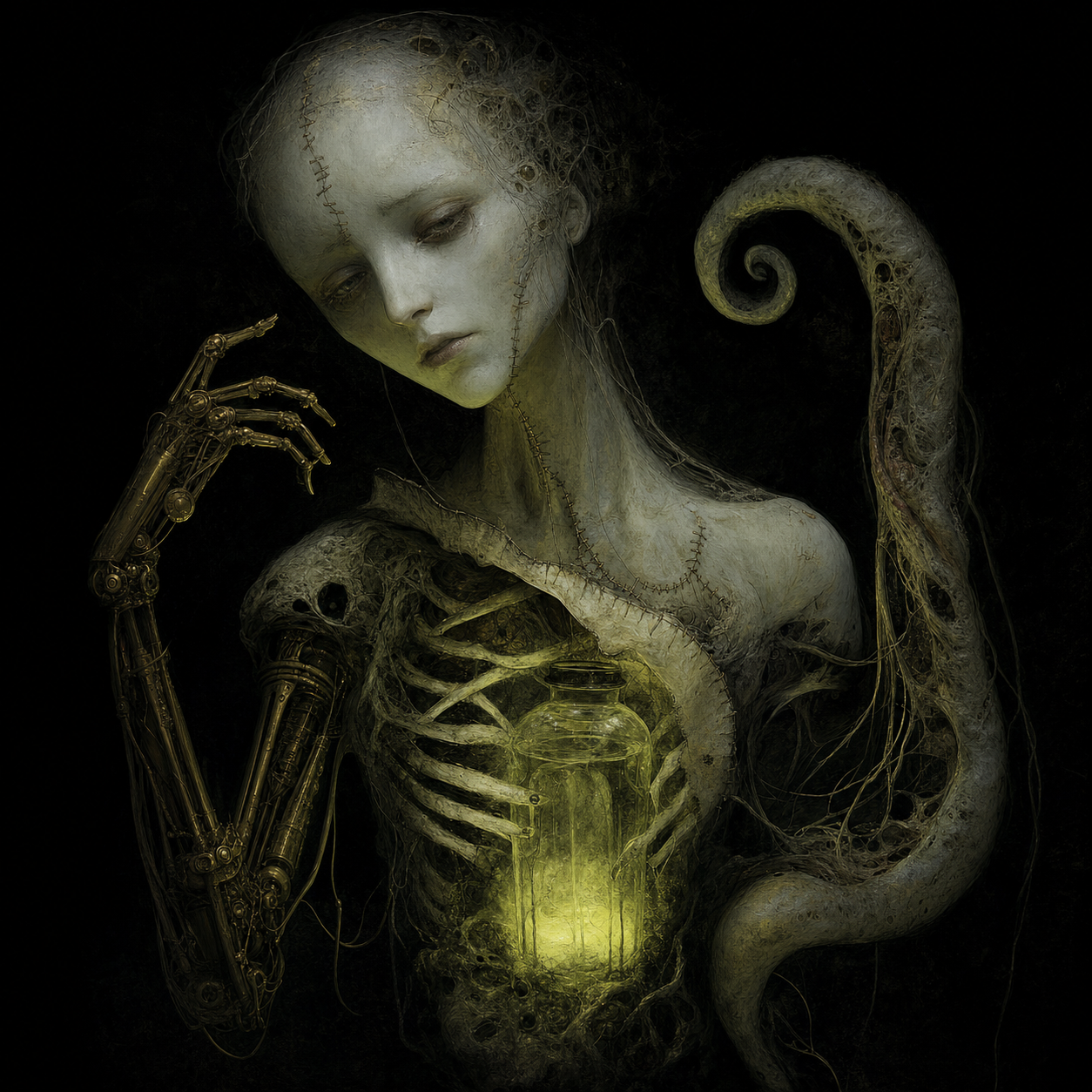
A body-horror prestige game for the browser and your phone. You inherit Dr. Stein's ruined lab. You stitch creatures from incompatible parts. Every body you make is mortal, asymmetric, and yours alone.
MonsterLab is the prestige body-horror game the monster-builder genre never got. You don't collect creatures. You find what's left of them. A jar. A spine. An eye still warm. You stitch them into something that breathes — briefly — and then you live with what you made.
It runs in a browser. It runs on a phone. It is touch-first, story-first, and uncompromising about tone. Junji Ito linework, Beksiński atmosphere, Cronenberg practical-effect wetness — rendered for the device you already carry, the way prestige TV is made for the screen in your living room.
The genre is mature. The audience is mature. The IP is thirty years old and was always pointed here.
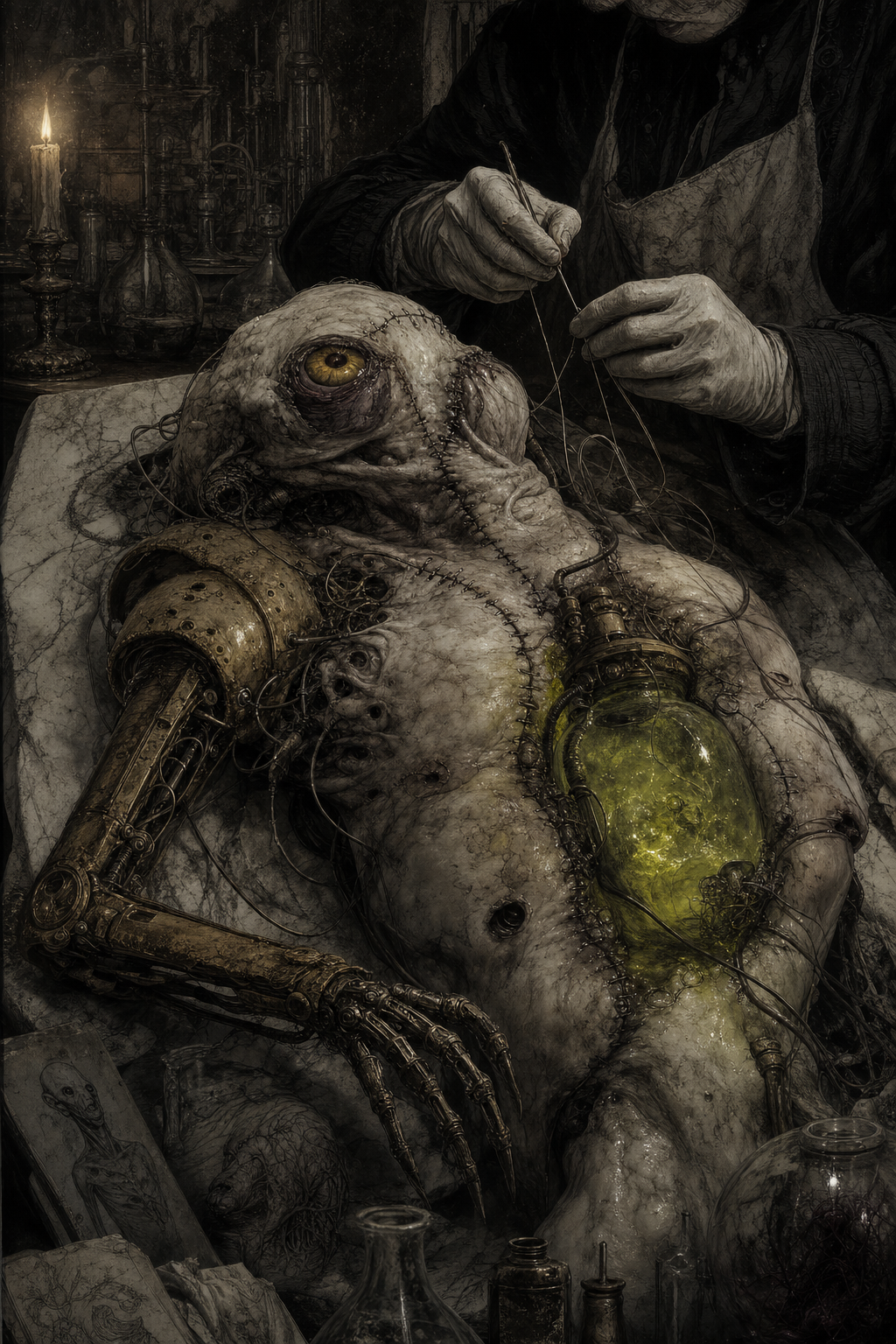
Every body you make is a draft of the one you wish you'd made.
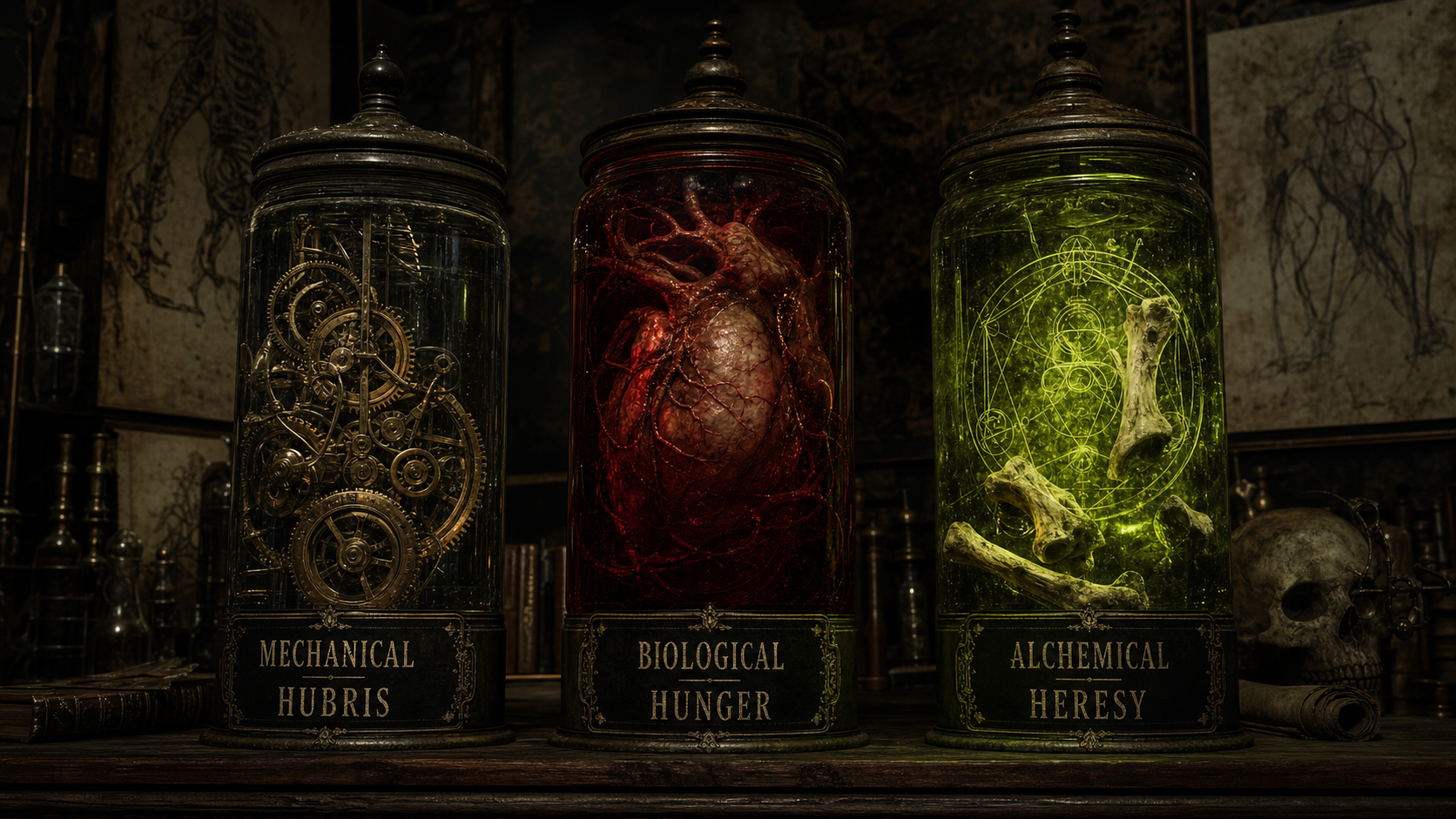
The original game had three sciences — Mechanical, Biological, Alchemical — locked in a rock-paper-scissors triangle. The 2026 reinvention keeps the spine and matures the framing. Each discipline is now a sin: the line a maker chooses to cross.
Brass, gears, pneumatic sinew. The sin of believing a body is a problem of engineering. Sharp, fast, brittle.
Meat, viscera, the parts that still pulse. The sin of believing a body should grow. Wet, durable, demanding.
Bone glyphs, fluorescent fluids, the wrong kind of glow. The sin of believing a body can be summoned. Unstable, devastating, costly.
Every other monster game asks you to grind, gacha, and trade. MonsterLab asks you to build, mourn, and choose. Four pillars define the difference.
A tactile, touch-first monster builder. Drag parts onto a marble slab. Suture them. Wake them up. Live with the result.
Every monster you make is mortal. When one dies, parts return to your shelf — older, warmer, with memory. The lab itself remembers.
No gacha, no loot boxes, no PvP grind. A finite, hand-authored part library. Every creature is a real decision, not a probability.
A new chapter drops every night, the way a prestige series releases. You play in 20-minute sittings. The story finishes — and means it.
MonsterLab is the rare game where the fiction and the technology rhyme. A Victorian generative engine that stitches parts into one-of-one creatures — the metaphor and the tech stack are the same object. We use that, on both sides of the screen.
The lab is alive. It renders the creature you stitched, remembers what you made, and writes itself around your choices in Dr. Stein's voice.
AI collapses the cost curves that historically made this genre/scope impossible at this team size. The economics finally match the vision.
What AI does not touch: the story spine, the visual direction, the tone calls, the canon. Those are human-authored, full stop. The lab generates within a curated frame, the way a director shapes what a camera sees. The body-horror prestige audience is allergic to slop — we earn their trust by being explicit about the line.
The tone is the product. We are protective of it.
Six parts. Visible sutures. A handful of traits inherited from whatever you stitched together. A name only you know.
MonsterLab is not a pitch deck. It is a thirty-year creative record with a registered domain, an original roster hand-sketched by Dan Burton, and an 18-page design document submitted to SEGA in 1999. The receipts are public. The archive is indexable. The story has been pointed at this moment for a long time.
Looking for a single publisher, studio, or co-development partner. Web-first, mobile-native, prestige horror. The IP, the lore, the archive, and the art direction are ready. Let's build the lab.